
An angle greater than a right angle (90°) but smaller than a straight angle (180°) is called obtuse.
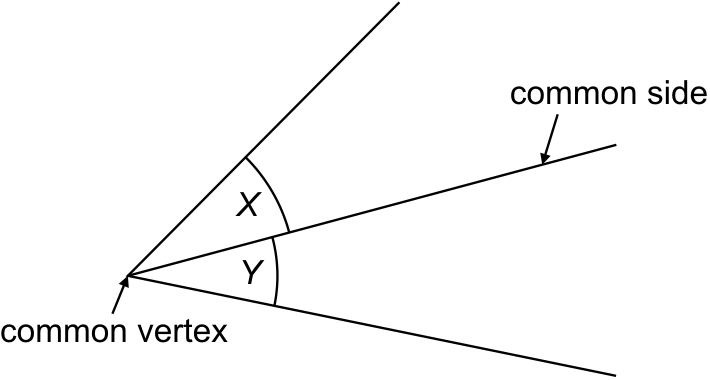
The word adjacent means 'next to'.
In Maths we can have adjacent angles. In the pic below, angles X and Y are adjacent.
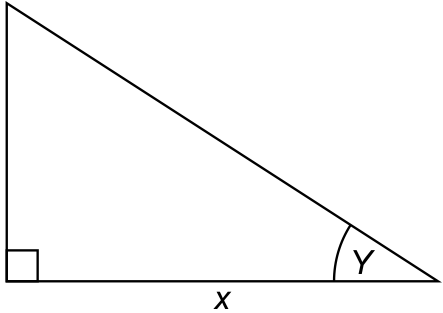
We can also have a side adjacent to an angle. In the pic below, side x is adjacent to angle Y.
The word is derived from Greek: isos (equal) and skelos (legs).
An isosceles triangle has 2 equal sides and 2 equal angles (the ones opposite the equal sides). These equal angles are often referred to as 'base angles'.
In the pic below, sides a and b are equal. Angles A and B are also equal.
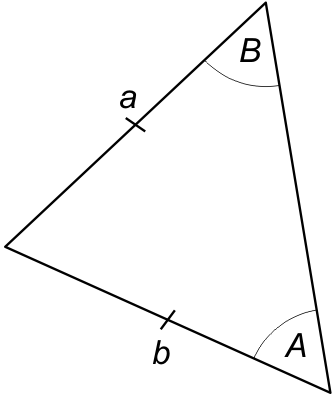
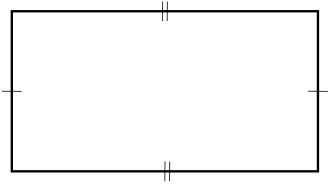
To show that two or more sides are equal, we use dash marks.
An equal number of dash marks shows the sides of equal length.
On a rectangle, this would be shown as:
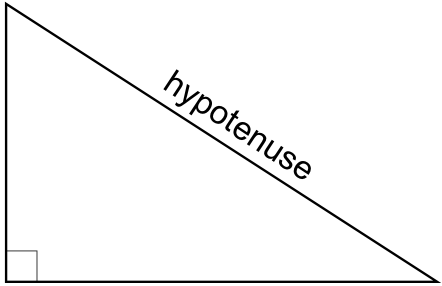
The side opposite the right angle in a right-angled triangle is called the hypotenuse. This is also the longest side in any right-angled triangle.

Convert the above sentence into digits using the number of letters in each word and you'll get the first seven digits of π.

Parallel lines have so much in common and yet they'll never meet.
In a class of 23 people, there is a 50% chance of having 2 individuals sharing the same birthday.
This is often referred to as the Birthday Paradox.

A fee earned or paid for either providing or receiving a service.
For example, estate agents charge a commission for selling a house on behalf of the owner. A commission is often a percentage of the value of the product sold.
This site uses cookies that enable us to make improvements, provide relevant content, and for analytics purposes. For more details, see our Cookie Policy. By clicking Accept, you consent to our use of cookies by us and third party code embedded within this site. To change your consent, click the "Update Cookie Consent" link at the bottom of the webpage at any time.